 |
||||||||||||||||||||||||||||||||||||||||||||||||||||||||||||||||||||||||||||||||||||||||||||||||||||||||||||||||||||
Tom Hedke Hail Repair - Uvalde, Texas
Uvalde is a city in and the county seat of Uvalde County,
Texas, United States. The population was 15,751 at the 2010
census. Uvalde was founded by Reading Wood Black in 1853 as
the town of Encina.
Wikipedia
History
On February 8, 1850, Uvalde County was formed by
a legislative act from Bexar County but failed
to secure a permanent county because of an
insufficient number of settlers, until the year
1852. These first settlers to arrive at the
canyon later changed the name to Uvalde. Of
equal importance to the early history of the
county was the development of the farming and
ranching settlements at Waresville by Capt.
William Ware in the upper Sabinal Canyon and
Patterson Settlement by George W. Patterson,
John Leakey, and A. B. Dillard on the Sabinal
River; these settlements coincided with Reading
Black's development of the Leona River at Encina.
A second attempt by Black to organize the
territory resulted in a petition to form a
county encompassing the area of the present
Kinney, Maverick, and Uvalde counties.

Reading W. Black's initiatives helped to
truly establish Uvalde, in August of 1866,
following the Civil War. Mr. Black hired a
surveyor from Germany and started work on
May 2, 1855, which is said to be the birth
date of Uvalde. The town was divided into
464 lots, a schoolhouse square, a cemetery
(located on the corner of Leona and North
Park), a park (Uvalde Athletic field), a
garden, presently the City park, and four
town plazas. Mr. Black names the plazas: the
market, now known as the bandstand; the
fountain, now the post office; the townhall
(City Hall); and the courthouse.
On February 8, 1850, Uvalde County was formed by
a legislative act from Bexar County but failed
to secure a permanent county because of an
insufficient number of settlers, until the year
1852. These first settlers to arrive at the
canyon later changed the name to Uvalde. Of
equal importance to the early history of the
county was the development of the farming and
ranching settlements at Waresville by Capt.
William Ware in the upper Sabinal Canyon and
Patterson Settlement by George W. Patterson,
John Leakey, and A. B. Dillard on the Sabinal
River; these settlements coincided with Reading
Black's development of the Leona River at Encina.
A second attempt by Black to organize the
territory resulted in a petition to form a
county encompassing the area of the present
Kinney, Maverick, and Uvalde counties.
Reading W. Black's initiatives helped to
truly establish Uvalde, in August of 1866,
following the Civil War. Mr. Black hired a
surveyor from Germany and started work on
May 2, 1855, which is said to be the birth
date of Uvalde. The town was divided into
464 lots, a schoolhouse square, a cemetery
(located on the corner of Leona and North
Park), a park (Uvalde Athletic field), a
garden, presently the City park, and four
town plazas. Mr. Black names the plazas: the
market, now known as the bandstand; the
fountain, now the post office; the townhall
(City Hall); and the courthouse.
On February 8, 1850, Uvalde County was formed by
a legislative act from Bexar County but failed
to secure a permanent county because of an
insufficient number of settlers, until the year
1852. These first settlers to arrive at the
canyon later changed the name to Uvalde. Of
equal importance to the early history of the
county was the development of the farming and
ranching settlements at Waresville by Capt.
William Ware in the upper Sabinal Canyon and
Patterson Settlement by George W. Patterson,
John Leakey, and A. B. Dillard on the Sabinal
River; these settlements coincided with Reading
Black's development of the Leona River at Encina.
A second attempt by Black to organize the
territory resulted in a petition to form a
county encompassing the area of the present
Kinney, Maverick, and Uvalde counties.
Reading W. Black's initiatives helped to
truly establish Uvalde, in August of 1866,
following the Civil War. Mr. Black hired a
surveyor from Germany and started work on
May 2, 1855, which is said to be the birth
date of Uvalde. The town was divided into
464 lots, a schoolhouse square, a cemetery
(located on the corner of Leona and North
Park), a park (Uvalde Athletic field), a
garden, presently the City park, and four
town plazas. Mr. Black names the plazas: the
market, now known as the bandstand; the
fountain, now the post office; the townhall
(City Hall); and the courthouse.
On February 8, 1850, Uvalde County was
formed by a legislative act from Bexar County
but failed to secure a permanent county because
of an insufficient number of settlers, until the
year 1852. These first settlers to arrive at the
canyon later changed the name to Uvalde. Of
equal importance to the early history of the
county was the development of the farming and
ranching settlements at Waresville by Capt.
William Ware in the upper Sabinal Canyon and
Patterson Settlement by George W. Patterson,
John Leakey, and A. B. Dillard on the Sabinal
River; these settlements coincided with Reading
Black's development of the Leona River at Encina.
A second attempt by Black to organize the
territory resulted in a petition to form a
county encompassing the area of the present
Kinney, Maverick, and Uvalde counties.
Reading W. Black's initiatives helped to
truly establish Uvalde, in August of 1866,
following the Civil War. Mr. Black hired a
surveyor from Germany and started work on
May 2, 1855, which is said to be the birth
date of Uvalde. The town was divided into
464 lots, a schoolhouse square, a cemetery
(located on the corner of Leona and North
Park), a park (Uvalde Athletic field), a
garden, presently the City park, and four
town plazas. Mr. Black names the plazas: the
market, now known as the bandstand; the
fountain, now the post office; the townhall
(City Hall); and the courthouse.
UVALDE COUNTY, named for Spaniard
Juan de Ugalde,qv is in Southwest Texas
midway between San Antonio and the
International Amistad Reservoir on the
United States-Mexico border. Uvalde County
covers 1,588 square miles and the Nueces,
Leona, Sabinal, Dry Frio, and Frio rivers
flow through Uvalde County. At the
intersection of U.S. highways 83 and 90 is
Uvalde, the county seat. Other major
towns are Knippa, Sabinal, and Utopia; minor
towns are Cline, Montell, Concan, and Reagan
Wells.
Artifacts discovered in various parts of the
county indicate that people hunted and
gathered in the future Uvalde County as long
ago as 7000 B.C. After the establishment of
San Antonio in 1718, the Uvalde County
region was consistently traversed by Spanish
soldiers, commercial packtrains, buffalo
hunters, cattlemen, and mineral
prospectors.
In 1762 Nuestra Señora de la Candelaria Mission was established near the site of present Montell and near the site of a prehistoric Indian village at Candelaria Springs. The mission was abandoned in 1767 due to Comanche attacks. On January 9, 1790, Juan de Ugalde,qv governor of Coahuila and commandant of the Provincias Internas,qv led 600 men to a decisive victory over the Apaches near the site of modern Utopia at a place known then as Arroyo de la Soledad. In honor of his victory, the canyon area was thereafter called Cañon de Ugalde. The years immediately following the Civil War were marked by conflicts between Confederates and Unionists returning to live in Uvalde County. Black's attempt to form a strong local Union League may have led to his assassination in October 1867. At the end of the Civil War, Uvalde County remained the last frontier district court site for a region that included the unorganized territories of Zavala, Kinney, Edwards and Maverick counties. The region was home to smugglers, cattle and horse rustlers, and numerous other desperadoes. One of the county's most colorful and powerful characters during this period of lawlessness was its most notorious cattle rustler, J. King Fisher. Uvalde County gradually emerged. 
UVALDE FACTS:
During the first decade of the twentieth
century the county's population grew from
4,617 in 1900 to an estimated 11,233 in
1910.
One-fourth of all mohair produced in the
United States in 1903 originated in Uvalde
County.
Between 1900 and 1903 irrigated farm acres
increased from 365 to 2,500. By 1903 farms
were successfully growing peaches, plums,
figs, pears, onions, tomatoes, pumpkins,
melons, potatoes, cabbage, and beans. Onions
shipped from Uvalde County reached a high of
100,000 pounds in 1903.
Limestone asphalt mined at Blewett in
southwest Uvalde County was shipped to
road-paving contractors throughout Texas
from 1898 to 1901.
In
1910 county farmers harvested 23,135 pounds
of pecans.
In
1921, the construction of the Uvalde and
Northern Railway to Camp Wood and of the
Asphalt Beltway Railway in 1921, and the
expansion of the asphalt mines in far
southwestern Uvalde County at Blewett and
Dabney, drew in Mexican Americans, whom by
1930, made up 40 percent of Uvalde County's
population.
The
Great Depression caused many Mexicans living
in Uvalde County and Texas to return
to the relatively calm political environment
and improving economic conditions in Mexico.
Only large-scale ranches survived the
depression.
Two
notable government projects were completed
in the county in the later part of the
1930s: the National Fish Hatchery, three
miles west of Uvalde (1937), and Garner
State Park, which was built with Civilian
Conservation Corps labor and opened in 1941.
The National Fish Hatchery, produced a
million fish annually in the early
1970s-fish produced were channel catfish,
largemouth bass, and sunfish. Ranchers began
leasing their land to hunters.
Garner Army Air Field opened in 1941. Due to
a boom in economy, the land was turned over.
From 1947 to present day, this land is the
home of Southwest Texas Junior College.
Ranchmen in Uvalde County were
primarily breeding Hereford cattle by 1940.
In 1948 the
dominant agribusinesses in Uvalde County
were livestock and the wool and mohair
industry; that year an estimated 48,448
acres of farmland was under cultivation.
A
2,500-acre pecan plantation, irrigated by
one of the largest artesian wellsqv in South
Texas, had 30,000 trees in Uvalde County in
1940. During the 1950s a devastating drought
claimed large numbers of cattle and live oak
trees, as water wells went dry; the
production of corn, wheat, cotton, and oats
declined dramatically, and the number of
farms dropped from 690 in 1950 to 525 in
1959. The raising of pecans remained a major
industry in the county in the 1990s.
By
1960 Mexican Americans made up one half of
Uvalde County's 16,015 population. Efforts
to gain civil rights for Hispanics in Uvalde
County began with the establishment of the
Tomas Valle Post of the American Legion.
As
late as November 23, 1973, a federal
administrative judge ruled that Uvalde
County schools were still segregated. County
churches maintained segregated places of
worship until an integrated Catholic church
emerged in Uvalde in 1965.
In
1973 Uvalde County had one of the largest
wool and mohair merchandising warehouses in
Texas. By 1975 the county rated third among
counties in Texas in Angora goat and mohair
production.
By the 1970s the Hereford breed had decreased in popularity, and ranchers had begun to crossbreed with Brahman cattle,qv a breed able to graze farther from water in hot weather. Since 1973 Uvalde County livestock raisers have introduced a number of European breeds to produce cattle more adaptable to feedlots, which have become more common.
The
population grew from 17,348 in 1970 to
22,441 in 1980.
A
substantial increase in improved acreage,
from 54,187 acres in 1970 to 123,576 acres
in 1980, resulted in increased production of
corn, wheat, and cotton. Approximately $45
million from farming industry in Uvalde was
recorded in 1974.
County voters supported Democratic
presidential candidates in all elections
except in the years 1928 and 1952. After
1952, however, voters consistently supported
Republican candidates, with one exception in
1964.
The
Texas Agricultural Extension Service
recorded an estimated market value of
$11,062,000 for cotton, $6,183,000 for corn,
and $1,100,000 for wheat in 1989 for Uvalde
County. A variety of vegetables with
estimated cash receipts of $7,982,000 were
grown in the county that year-spinach,
onions, cantaloupes, carrots, cabbage, and
cucumbers.
Ranchers in 1989 received an estimated
$2,222,700 in hunting leases on 740,000
acres of land. These profits helped them
survive losses in other areas of their
operation.
County ranchers fed an estimated 43,500 beef
cattle, 17,000 pigs, 85,000 goats, and
38,000 sheep in 1989.
The
allocation of the county's underground water
was the dominant concern for farmers,
ranchers, merchants, and politicians
throughout the 1980s. Below-average rainfall
in the late 1980s accelerated efforts to
maintain local control of underground water
supplies. In January 1989 Uvalde County
joined Medina County by withdrawing from the
Edwards Underground Water District.
Uvalde has taken on the reputation of the
"County of 1,000 Springs," and it is no
mystery that the waterways that run through
Uvalde County are crystal clear, giving way
to the town slogan of " Clearly, Texas."
A
rare winter freeze in 1989, when
temperatures dipped to 6° F, so extensively
damaged the county's winter vegetable crop
that Uvalde county judge Bill Mitchell
declared the county a disaster area.
In
1990 Uvalde County had a population of
23,340, with 60 percent identified as
Hispanic.
BIBLIOGRAPHY: Lizardo S. Berrios,
Socialization in a Mexican-American
Community-A Study in Civilization
Perspective (Ph.D. dissertation, New School
for Social Research, 1979). Lois Miller
Carmichael, The History of Uvalde County
(M.A. thesis, Southwest Texas State Teachers
College, 1944). Florence Fenley, Oldtimers:
Frontier Days in the Uvalde Section of
Southwest Texas (Uvalde, Texas: Hornby,
1939). A Proud Heritage: A History of Uvalde
County (Uvalde, Texas: El Progreso Club,
1975). Uvalde Leader-News, January 14, 1990.
Vertical images, El Progreso Memorial
Library, Uvalde, Texas. WPA Texas Historical
Records Survey, Inventory of the County
Archives of Texas (MS, Barker Texas History
Center, University of Texas at Austin).
Tom Hedke Auto Hail Repair guarantees all work Tom works with all insurance companies. We can waive your deductible and fix your hail damage. Call or come in today for your free estimate. If you have a small dent or lots of dents, call today. We can repair your dents and your car or truck will look like new. There may be no need for expensive auto body work or a body shop. A body shop is great for major hail damage, but for dings and dents PDR (paintless dent repair) is a better hail repair option. It will save you money and is less expensive on your insurance. Insurance companies prefer PDR because it is better than paying a body shop much more money for the body work. Hail damage repair is what we do.
It’s a fact that minor dings and dents are unavoidable. With Tom Hedke Auto Hail Repair you don't have to live with ugly dings and dents! For those who seek only the best, Tom Hedke Auto Hail Repair is the ideal service for this common problem. Have a door ding or a minor dent? Don't spend a fortune or waste valuable time at a body shop. Have it removed with Tom Hedke Auto Hail Repair and maintain the original factory finish.
Areas Served by Tom Hedke Hail Repair Hail Repair - Dent Repair - Hail Damage - Hail
Phone (432) 349-4056 Open 8:00 A.M. to 8:00 P.M. email. tom@tomhedkehailrepair.com
|
||||||||||||||||||||||||||||||||||||||||||||||||||||||||||||||||||||||||||||||||||||||||||||||||||||||||||||||||||||
|
© Copyright 2009-2014 Tom Hedke Hail Repair, www.tomhedkehailrepair.com All Rights Reserved. |
||||||||||||||||||||||||||||||||||||||||||||||||||||||||||||||||||||||||||||||||||||||||||||||||||||||||||||||||||||










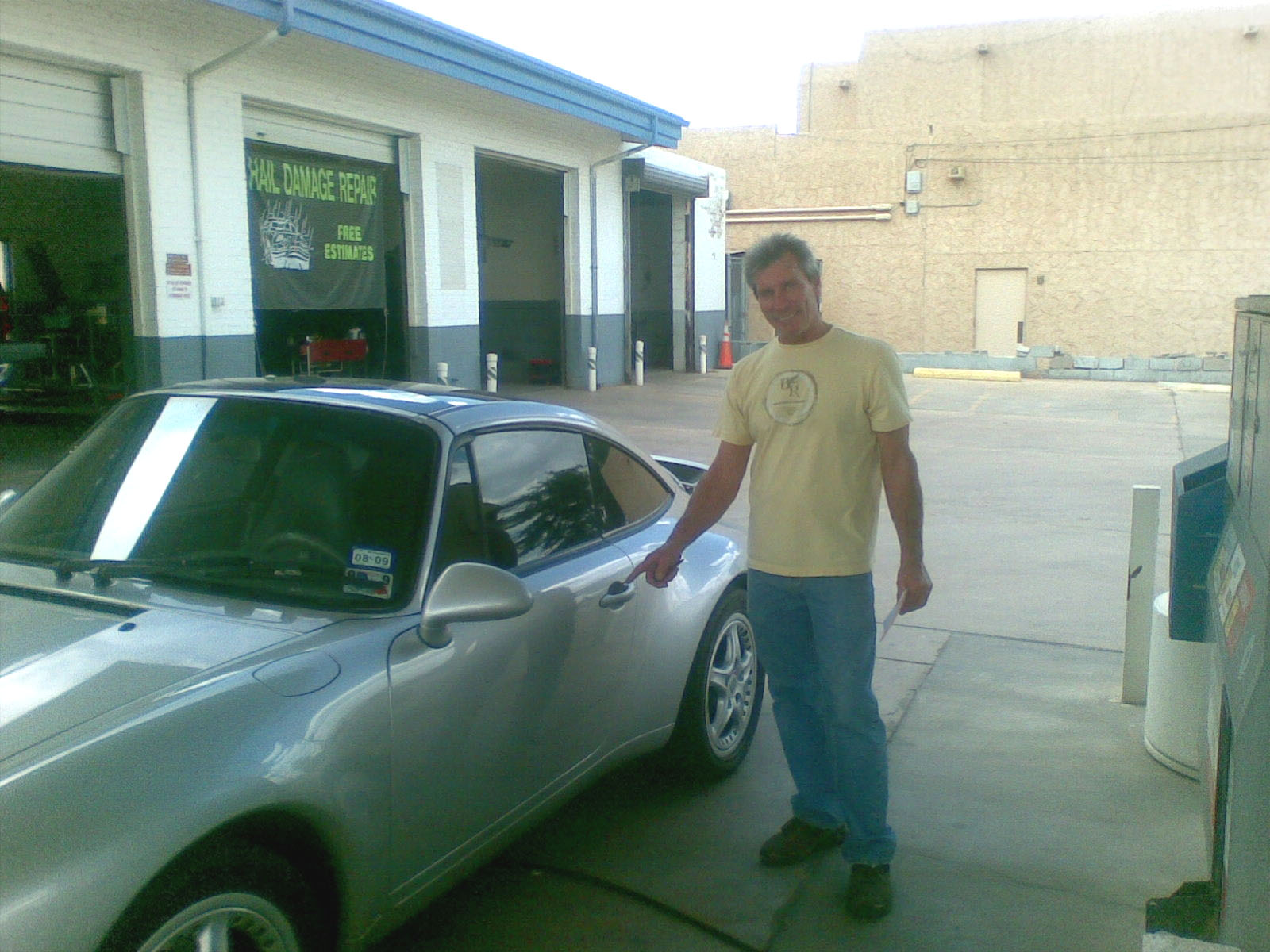 Tom
Hedke Auto
Hail Repair is the “Number one auto care service"
in the area! We remove minor dings and dents, door dings, shopping
cart dents, acorn and hail damage dents, creases and small dents from
all vehicles. This amazing service is performed without using paint or
bodywork! Save Hundreds! Insurance claims are welcome. We work with
insurance companies everyday. You can have your insurance company
Tom
Hedke Auto
Hail Repair is the “Number one auto care service"
in the area! We remove minor dings and dents, door dings, shopping
cart dents, acorn and hail damage dents, creases and small dents from
all vehicles. This amazing service is performed without using paint or
bodywork! Save Hundreds! Insurance claims are welcome. We work with
insurance companies everyday. You can have your insurance company